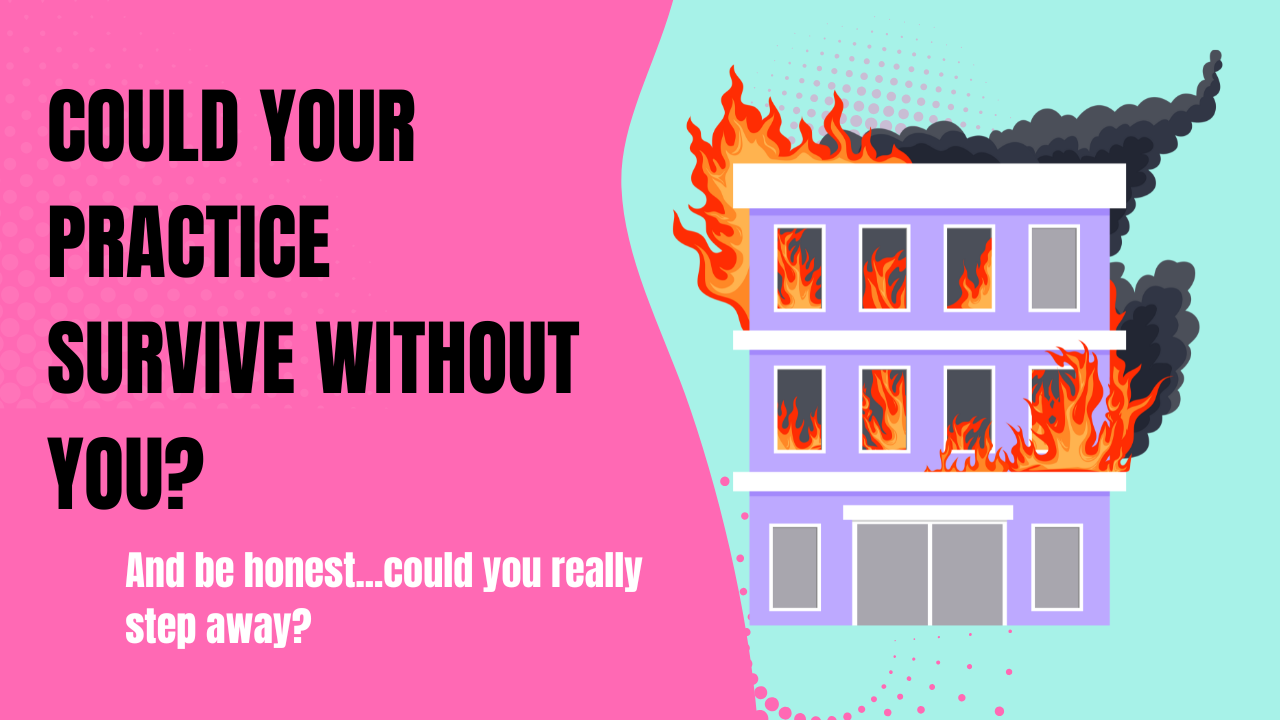
Be Honest. Could you really step away?
I’ve been ill for almost a month. I’ve managed, mostly, because I’m a parent, so the world doesn’t stop turning, does it? But last week I had to reschedule clients – something I almost never do.
As I cancelled plans and reshuffled clients, I kept coming back to a piece of business advice I heard some time ago:
“𝘐𝘧 𝘺𝘰𝘶𝘳 𝘣𝘶𝘴𝘪𝘯𝘦𝘴𝘴 𝘤𝘢𝘯’𝘵 𝘴𝘶𝘳𝘷𝘪𝘷𝘦 𝘸𝘪𝘵𝘩𝘰𝘶𝘵 𝘺𝘰𝘶, 𝘺𝘰𝘶’𝘳𝘦 𝘥𝘰𝘪𝘯𝘨 𝘪𝘵 𝘸𝘳𝘰𝘯𝘨.”
I don’t disagree, and I’ve certainly said versions of it myself.
But it’s rather black and white, so I want to call it out.
𝗪𝗵𝗲𝗻 𝗶𝘁 𝗰𝗼𝗺𝗲𝘀 𝘁𝗼 𝘃𝗲𝘁𝗲𝗿𝗶𝗻𝗮𝗿𝘆 𝗽𝗿𝗮𝗰𝘁𝗶𝗰𝗲 𝗼𝘄𝗻𝗲𝗿𝘀𝗵𝗶𝗽, 𝘁𝗵𝗮𝘁 𝗮𝗱𝘃𝗶𝗰𝗲 𝗶𝘀 𝗳𝗮𝗿 𝘁𝗼𝗼 𝘀𝗶𝗺𝗽𝗹𝗶𝘀𝘁𝗶𝗰.
When you’re a practice owner, you are the clinical lead, culture setter, risk holder, decision maker, the name above the door. Your reputation is tied to every outcome, and your professional identity is wrapped up in the standard of care being delivered inside those walls.
So when someone says, “If you can’t step away, you’re doing it wrong,” it ignores something pretty important – that you 𝗔𝗥𝗘 𝘁𝗵𝗲 𝗯𝘂𝘀𝗶𝗻𝗲𝘀𝘀, 𝗮𝗻𝗱 𝘁𝗵𝗲 𝗯𝘂𝘀𝗶𝗻𝗲𝘀𝘀 𝗶𝘀 𝗬𝗢𝗨. You built something with your fingerprints, and your heart and soul, on every wall.
Of course it’s hard to just step back.
If you started the practice from scratch, then the practice began as YOU. It was all about your skill, your clinical judgement, your relationships and your standards. If you’re more specialist in a field, there are certain cases that literally cannot be done without you. You are the expertise.
A veterinary practice in its early days is sometimes called a “dancing bear” business. It works because 𝗬𝗢𝗨 are there performing.
And yet, the gurus on the internet tell you that real success means removing yourself entirely.
𝗕𝘂𝘁 𝘀𝗵𝗼𝘂𝗹𝗱 𝘆𝗼𝘂 𝗯𝗲 𝗿𝗲𝗺𝗼𝘃𝗮𝗯𝗹𝗲 𝗳𝗿𝗼𝗺 𝗲𝘃𝗲𝗿𝘆𝘁𝗵𝗶𝗻𝗴? Or just from the things that never truly required you in the first place?
Some owners grow out of the dancing bear phase. Others struggle because 𝗯𝗲𝗶𝗻𝗴 𝗶𝗻𝗱𝗶𝘀𝗽𝗲𝗻𝘀𝗮𝗯𝗹𝗲 𝗼𝗳𝘁𝗲𝗻 𝗳𝗲𝗲𝗹𝘀 𝘀𝗮𝗳𝗲𝗿.
There are absolutely areas in your business where you are involved because you are genuinely, uniquely required.
And there are areas where you’re involved 𝗯𝗲𝗰𝗮𝘂𝘀𝗲 𝘆𝗼𝘂 𝗱𝗼𝗻’𝘁 𝗾𝘂𝗶𝘁𝗲 𝘁𝗿𝘂𝘀𝘁 it will be done to your standard, you worry what will happen if you’re not watching, you struggle to let others get something wrong, and you feel responsible for absolutely everything.
It’s even uncomfortable to write that because I 𝘧𝘦𝘦𝘭 that. I was that.
When I was running my previous business and leading a team, I eventually stepped back completely. But before that, committing to no longer being the highest contributor to turnover took years – seriously, years – to feel comfortable with.
Because it hits an even deeper level: 𝗶𝗱𝗲𝗻𝘁𝗶𝘁𝘆, 𝗰𝗼𝗻𝘁𝗿𝗼𝗹, 𝗲𝗺𝗼𝘁𝗶𝗼𝗻𝗮𝗹 𝗲𝗻𝘁𝗮𝗻𝗴𝗹𝗲𝗺𝗲𝗻𝘁.
Your practice becomes so much more than just a business. It becomes your security, your legacy, and often evidence of your worth and proof of your competence.
𝗦𝘁𝗲𝗽𝗽𝗶𝗻𝗴 𝗯𝗮𝗰𝗸 𝗳𝗲𝗲𝗹𝘀 𝗲𝘅𝗶𝘀𝘁𝗲𝗻𝘁𝗶𝗮𝗹𝗹𝘆 𝗿𝗶𝘀𝗸𝘆.
𝘞𝘩𝘢𝘵 𝘩𝘢𝘱𝘱𝘦𝘯𝘴 𝘵𝘰 𝘺𝘰𝘶𝘳 𝘴𝘦𝘯𝘴𝘦 𝘰𝘧 𝘴𝘦𝘭𝘧 𝘸𝘩𝘦𝘯 𝘺𝘰𝘶 𝘢𝘳𝘦 𝘯𝘰𝘵 𝘯𝘦𝘦𝘥𝘦𝘥?
So what do we do?
𝗪𝗲 𝗵𝗼𝗹𝗱 𝗼𝗻 𝘁𝗶𝗴𝗵𝘁𝗲𝗿.
If we just control a few more things, step in and do things that don’t truly need us but perhaps other people will learn from us, double-check people’s work so we can oversee what’s happening and spot training needs… maybe then we’ll feel safer.
𝗕𝘂𝘁 𝗶𝘁 𝗻𝗲𝘃𝗲𝗿 𝘁𝗿𝘂𝗹𝘆 𝗲𝗻𝗱𝘀.
If your practice cannot function effectively without you, then yes, something needs attention.
𝗕𝘂𝘁 𝗶𝘁 𝗺𝗶𝗴𝗵𝘁 𝗻𝗼𝘁 𝗯𝗲 𝘄𝗵𝗮𝘁 𝘆𝗼𝘂 𝘁𝗵𝗶𝗻𝗸.
It might not be a lack of SOPs. It might not be a staffing problem. It might not even be a competence gap in your team.
It might be your 𝘁𝗼𝗹𝗲𝗿𝗮𝗻𝗰𝗲 𝗳𝗼𝗿 𝗿𝗶𝘀𝗸, 𝘆𝗼𝘂𝗿 𝗮𝗯𝗶𝗹𝗶𝘁𝘆 𝘁𝗼 𝘀𝗶𝘁 𝘄𝗶𝘁𝗵 𝗶𝗺𝗽𝗲𝗿𝗳𝗲𝗰𝘁𝗶𝗼𝗻, 𝘆𝗼𝘂𝗿 𝘄𝗶𝗹𝗹𝗶𝗻𝗴𝗻𝗲𝘀𝘀 𝘁𝗼 𝗹𝗲𝘁 𝗼𝘁𝗵𝗲𝗿𝘀 𝗴𝗿𝗼𝘄 𝘁𝗵𝗿𝗼𝘂𝗴𝗵 𝗺𝗶𝘀𝘁𝗮𝗸𝗲𝘀, 𝗼𝗿 𝘆𝗼𝘂𝗿 𝗰𝗮𝗽𝗮𝗰𝗶𝘁𝘆 𝘁𝗼 𝘀𝗲𝗽𝗮𝗿𝗮𝘁𝗲 𝘆𝗼𝘂𝗿 𝗶𝗱𝗲𝗻𝘁𝗶𝘁𝘆 𝗳𝗿𝗼𝗺 𝘁𝗵𝗲 𝗯𝘂𝘀𝗶𝗻𝗲𝘀𝘀.
I think “Could my business survive without me?” is a great question. But perhaps there’s an even more helpful way to look at this.
Try asking:
• Where am I genuinely indispensable?
• Where am I habitually involved?
• Where am I emotionally entangled?
• Where am I stepping in to soothe my own anxiety rather than solve the real problem?
𝘓𝘦𝘵 𝘮𝘦 𝘣𝘦 𝘤𝘭𝘦𝘢𝘳 𝘢𝘣𝘰𝘶𝘵 𝘴𝘰𝘮𝘦𝘵𝘩𝘪𝘯𝘨...
You 𝗔𝗥𝗘 𝗮𝗹𝗹𝗼𝘄𝗲𝗱 𝘁𝗼 𝗯𝗲 𝗻𝗲𝗲𝗱𝗲𝗱. You 𝗔𝗥𝗘 𝗮𝗹𝗹𝗼𝘄𝗲𝗱 to have a business that still depends on your expertise. You 𝗔𝗥𝗘 𝗮𝗹𝗹𝗼𝘄𝗲𝗱 to build something deeply personal.
But not at the cost of your sanity, health and peace.
It may involve some brave conversations, but 𝗮𝘃𝗼𝗶𝗱𝗶𝗻𝗴 𝗶𝘁 𝘄𝗶𝗹𝗹 𝗰𝗼𝘀𝘁 𝘆𝗼𝘂 𝗳𝗮𝗿 𝗺𝗼𝗿𝗲.
